Discover the buey tradition.
A buey is a mature steer — castrated young and harvested years later than the American norm. The years build the flavor.
A steer needs a purpose.
Over the course of her life, a cow and her calves will yield more than three times the beef a single steer can. So giving a steer her place on the pasture only makes sense if that steer serves another purpose.
In Spain, steers once earned their keep by pulling plows. That role has faded, but it still lives on in the world of bull ranches. There, oxen called cabestros move among the fighting bulls. Selected for their size and steady temperament, they help keep the herd calm. Only after years of service are they selected for harvest — shifting from working animals to Spain's most prized ribeye: the original chuletón de buey.
A chuletón is meant to be an event: a three- to four-pound ribeye, salted and grilled over flame, brought out on a wood board and shared by a small group.
USDA grades weren't built to measure the cattle we raise.
In Italy's Piedmont, an animal cannot be called bue grasso until its fourth year. In France, protected regional labels exist for cattle held well past the American norm.
In the US, cattle older than three and a half years cannot be graded Prime, Choice or Select. That ceiling traces back to federal standards set a century ago, when grain-fed cattle commonly reached market at two to four years old. As feedlots came to dominate, the typical harvest age fell to under twenty months, so every grade on an American label now describes a very young animal. Decades of that standard have taught consumers to equate young beef with good beef.
Europe's leading chefs don't accept that premise — in fact, they pay a premium for mature beef. Entire restaurants are built on it. The most famous, El Capricho in León, serves nothing but old oxen — bueyes finished for years on the restaurant's own farm. Critics have repeatedly called it the best steak in the world.
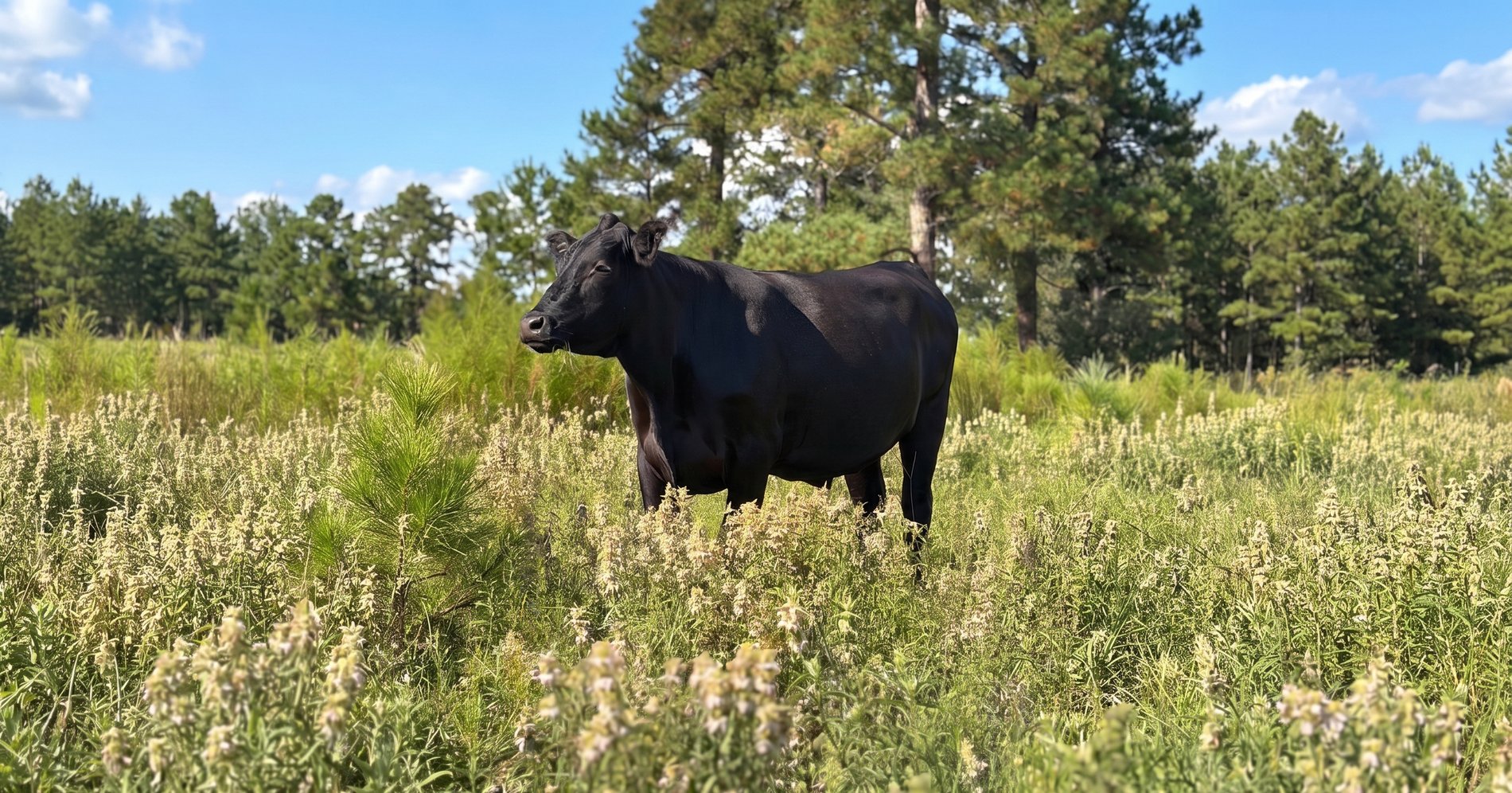 A buey in his sixth year
Bobwhite Bueyes™.
We initially kept steers because their grazing helped us meet our quail-habitat goals while our cow-calf program grew. Over time, we discovered that their flavor deepened with age.
What began as a habitat decision led to a parallel pursuit: exceptional beef. Tending an animal for three years past full market weight runs counter to convention in the US, but we've found that aging builds what a fast-finished animal can't.
Our livestock manager, Molly, now gives our bueyes — "Molly's boys" — extra time and attention. Each wears a geo collar that connects over Starlink, giving her a real-time read on his health and location. She selects bueyes in late fall, when a summer of grazing has left them in top condition. A diverse diet and age build the flavor; their late-fall condition provides the tender texture.
Five years is a floor, not a formula. It's a long-standing quality benchmark in Spain, and the point at which we have enough mature steers to support our program. If we can hold them longer and meet demand, we do. Our average buey is closer to six, and our Thanksgiving bueyes are past seven.